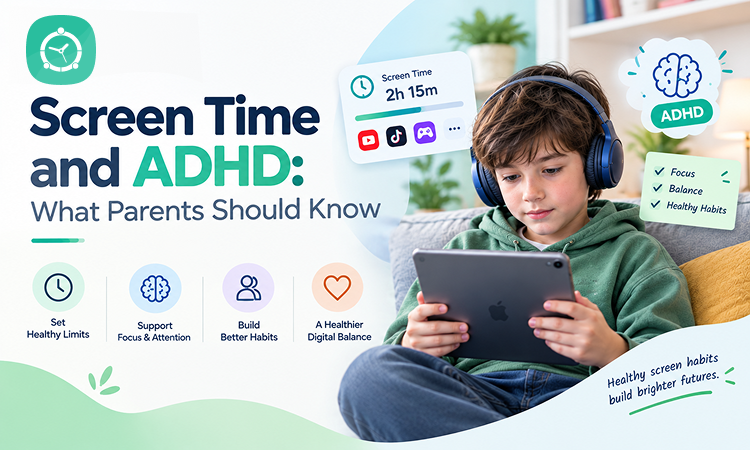
Screen Time and ADHD: What Every Parent Needs to Know
“Just five more minutes!”
If you’ve ever asked your child to put down a tablet, turn off a video game, or stop watching YouTube, you’ve probably heard those words.
For many families, managing screen time is already challenging. But when a child has attention-deficit/hyperactivity disorder (ADHD), switching off a favourite game or moving from screen time to homework can sometimes feel even harder.
Parents often wonder: Does too much screen time make ADHD worse? Can video games affect attention? Should children with ADHD have stricter screen time limits?
These are important questions, especially when phones, tablets, gaming consoles, and computers are part of everyday childhood.
The relationship between screen time and ADHD isn’t as simple as saying screens are good or bad. Some digital activities can support learning, creativity, and social connections. Others may interfere with sleep, routines, and responsibilities.
Understanding the difference can help parents create healthier digital habits without making every screen time conversation a struggle.
What Is ADHD in Children?
ADHD, or attention-deficit/hyperactivity disorder, is a neurodevelopmental condition that affects how people regulate attention, activity levels, and impulses.
Children with ADHD may experience difficulties with:
- Staying focused on tasks that require sustained effort
- Following multi-step instructions
- Organizing schoolwork and daily responsibilities
- Sitting still when expected
- Waiting their turn
- Managing impulses
- Switching between activities
- Remembering everyday tasks
Not every child with ADHD experiences the same challenges. Some primarily struggle with attention, while others show more hyperactive or impulsive behaviors. Many experience a combination.
ADHD is not caused by poor parenting, laziness, or a lack of discipline.
And importantly, having difficulty putting down a phone doesn’t automatically mean a child has ADHD.
ADHD requires a professional assessment that considers symptoms, their duration, and how they affect daily functioning in different settings.
Does Screen Time Cause ADHD?
This is one of the most common questions parents ask.
Current research does not establish that screen time directly causes ADHD.
Studies have found associations between higher screen exposure, problematic digital media use, and ADHD-related symptoms.
However, association doesn’t necessarily mean causation.
For example, children who already experience difficulties with attention or impulse control may be especially attracted to engaging digital activities. At the same time, certain screen habits may contribute to sleep problems or other difficulties that affect attention.
Researchers continue to investigate how these relationships work.
The practical takeaway for parents is simple: rather than worrying that every hour of screen time causes ADHD, pay attention to how digital activities affect your child’s sleep, mood, attention, schoolwork, and everyday routines.
Why Can Screens Be So Appealing to Kids With ADHD?
Have you ever noticed that your child struggles to concentrate on homework but can spend a long time playing a favorite video game?
That contrast can be confusing.
Parents may wonder:
“If my child can focus on gaming, why can’t they focus on schoolwork?”
The answer involves how different activities demand attention.
1. Immediate Feedback
Many video games provide instant responses to actions.
Complete a level, earn points, unlock a reward, or achieve a new goal—and the game responds immediately.
Homework often works differently.
A child may need to work for a long time before receiving feedback or experiencing a sense of accomplishment.
For some children with ADHD, activities with frequent feedback can be particularly engaging.
2. Constant Novelty
Short videos, games, and social media feeds often introduce something new every few seconds.
There’s always another video, challenge, level, or notification.
This constant novelty can make it difficult for some children to stop, especially when they already struggle with regulating attention or impulses.
3. Clear Goals and Rewards
Games often provide structured objectives.
Players know what they need to do, how they’re progressing, and what happens when they succeed.
Everyday responsibilities, such as cleaning a bedroom or completing homework, may feel less clearly defined.
Parents can use this insight to make offline tasks more manageable by breaking them into smaller steps and offering clear feedback.
4. Difficulty Switching Activities
For some children with ADHD, the biggest challenge isn’t necessarily the amount of screen time.
It’s the transition away from it.
Stopping an enjoyable activity and beginning a less appealing one can require significant self-regulation.
That’s why suddenly announcing “Screen time is over!” may trigger frustration.
Predictable routines, advance warnings, and clear expectations can make these transitions easier.
How Excessive Screen Time May Affect Children With ADHD
Screen time doesn’t affect every child in the same way.
However, certain digital habits can create additional challenges for children who already experience difficulties with attention, organization, or impulse control.
1. Sleep Problems
Late-night gaming, scrolling, or watching videos can delay bedtime.
Notifications, emotionally engaging content, and difficulty stopping an activity may also interfere with healthy sleep routines.
Poor sleep can make it harder for children to regulate emotions, pay attention, and manage behavior the following day.
For children with ADHD, protecting sleep is especially important.
Consider establishing a consistent bedtime routine and keeping entertainment screens out of the bedroom overnight.
2. Homework Distractions
Imagine your child trying to complete math homework while their phone keeps lighting up.
A gaming notification appears. A friend sends a message. Another video starts playing.
Each interruption creates an opportunity to lose focus.
For children who already struggle with sustained attention, these distractions can make homework feel even more difficult.
A quiet study environment with unnecessary notifications disabled may help.
3. Emotional Frustration
Some children become upset when a gaming session ends or when they must stop watching their favorite videos.
This doesn’t automatically indicate addiction.
However, repeated arguments, intense frustration, or difficulty following agreed limits may signal that the current screen time routine needs adjustment.
Children with ADHD may benefit from additional support during transitions rather than sudden restrictions.
4. Less Time for Physical Activity
When entertainment screens occupy much of a child’s free time, other important activities may get pushed aside.
These can include outdoor play, sports, hobbies, family conversations, and face-to-face friendships.
Physical activity is an important part of children’s overall health and can support emotional well-being.
The goal isn’t to eliminate digital entertainment but to make sure it doesn’t consistently replace movement and other healthy activities.
5. Difficulty Managing Daily Routines
Children with ADHD may already find organization and time management challenging.
Unstructured screen use can make routines harder when gaming or videos repeatedly delay meals, homework, chores, or bedtime.
A predictable daily schedule can reduce the number of decisions and negotiations children face throughout the day.
Are Video Games Bad for Children With ADHD?
Not necessarily.
Video games can provide entertainment, opportunities for teamwork, problem-solving, and social interaction.
Some games also involve planning, strategy, creativity, and persistence.
The important question isn’t simply whether your child plays video games.
It’s how gaming fits into the rest of their life.
Consider whether your child:
- Gets enough sleep
- Completes school responsibilities
- Participates in physical activities
- Maintains friendships and family relationships
- Can eventually stop playing with appropriate support
- Enjoys activities away from screens
If gaming regularly interferes with these areas, it may be time to review the rules.
Remember that different games have different features. A creative building game, an educational puzzle, and a highly competitive multiplayer game may produce very different experiences.
How Much Screen Time Should a Child With ADHD Have?
There isn’t one universal daily screen time limit that works for every child with ADHD.
The appropriate amount depends on factors such as age, developmental needs, sleep, school responsibilities, family routines, and the type of content being used.
A child who uses a tablet for school assignments has different needs from one who spends hours scrolling through entertainment videos.
Rather than focusing only on the total number of minutes, parents should consider three questions:
What is my child doing on the screen?
When are they using it?
What important activities might screen time be replacing?
For example, screen time that regularly delays bedtime may deserve more attention than a short, planned gaming session after homework.
If your child has ADHD, their pediatrician or treating clinician can help you develop a realistic media plan that fits their needs.
10 Practical Screen Time Tips for Parents of Kids With ADHD
Managing screen time doesn’t have to mean constant arguments.
Small changes in routines can make a meaningful difference.
1. Create a Predictable Screen Time Schedule
Children often respond better when they know what to expect.
Instead of deciding screen time rules differently every day, establish a routine.
For example:
- Homework and essential responsibilities come first.
- Entertainment screen time happens during agreed periods.
- Devices are put away during family meals.
- Screens are switched off before bedtime.
Keep the schedule realistic and consistent.
A visual routine can be especially useful for children who struggle with time management.
2. Give Advance Warnings
Suddenly ending an enjoyable activity can be difficult.
Try giving reminders before screen time ends.
You might say:
“You have ten minutes left. Start finishing your game.”
Then provide another reminder closer to the agreed stopping time.
For games that can’t be paused immediately, help your child identify a natural stopping point.
This doesn’t guarantee a frustration-free transition, but it can make expectations clearer.
3. Break Screen Time Into Manageable Sessions
Some children may find shorter, planned sessions easier to manage than one long, unstructured period.
Parents can experiment with schedules that include breaks for movement, snacks, or other activities.
The best arrangement depends on the child.
Avoid introducing so many interruptions that screen time itself becomes another source of stress.
4. Keep Screens Away From Bedtime
Sleep deserves special attention.
Create a calming bedtime routine that doesn’t revolve around gaming, social media, or short videos.
Consider charging devices outside the bedroom overnight.
Reading, quiet music, conversation, or other relaxing activities may help children prepare for sleep.
5. Reduce Notifications
Notifications are designed to attract attention.
Disable unnecessary alerts from games, social media, and entertainment apps during homework and other focused activities.
You can also encourage your child to use one screen at a time instead of switching constantly between devices.
6. Choose Content Carefully
Not all screen activities are equal.
Look for age-appropriate games, educational resources, creative tools, and content that supports your child’s interests.
Pay attention to features such as autoplay, endless scrolling, frequent rewards, and in-app purchases.
These can make it harder for some children to recognize when it’s time to stop.
7. Encourage Physical Activity
Outdoor play, sports, walking, cycling, and active hobbies can help create a healthier daily balance.
The activity doesn’t need to be competitive or highly structured.
Find something your child genuinely enjoys.
A child who loves basketball may be more willing to take a screen break for a game outside than for an activity chosen without their input.
8. Make Offline Tasks Easier to Start
Children with ADHD may struggle with starting tasks that feel overwhelming.
Instead of saying:
“Clean your entire room before you can play.”
Try breaking the task into smaller steps:
“First, put your books on the shelf. Then we’ll tackle the clothes.”
Clear instructions, visual checklists, and positive feedback can help.
Be careful not to make every essential responsibility dependent on earning screen time. Children also need opportunities to develop internal motivation and everyday life skills.
9. Involve Your Child in Setting Rules
Children are often more willing to cooperate when they understand the purpose of a rule.
Explain that screen time boundaries are intended to protect sleep, learning, and family time—not punish them for enjoying technology.
Ask which rules they think would be fair.
You can still make the final decisions while giving your child an opportunity to participate.
10. Review the Plan Regularly
What works today may not work six months from now.
School schedules change. Children mature. New games become popular.
Review your family’s digital routines and adjust them when needed.
The goal is progress, not perfection.
How FamilyTime Can Help Parents Manage Screen Time
Creating a healthy screen time routine is easier when parents have practical tools to support the rules they’ve established.
FamilyTime offers parental control features that can help families manage device use and build more consistent digital habits.
For parents of children with ADHD, these tools may be useful for reducing unnecessary distractions and making screen time boundaries more predictable.
Create Consistent Screen Time Schedules
With FamilyTime’s Screen Time Schedule, parents can establish device-use boundaries around bedtime, homework, meals, and other family activities.
A consistent schedule can help children understand when entertainment screen time is available and when it’s time to focus on other responsibilities.
Set Daily App Limits
FamilyTime’s Daily App Limits allow parents to manage time spent on supported apps.
Instead of repeatedly reminding a child to stop playing, parents can establish agreed limits in advance.
For children who struggle with transitions, these limits work best when paired with reminders and a predictable stopping routine.
Restrict Distracting Apps
With App Blocker, parents can restrict access to selected games or apps they consider inappropriate or distracting.
This can be helpful when certain apps repeatedly interfere with homework, sleep, or family routines.
Support Healthy Digital Habits
FamilyTime can help parents apply screen time rules more consistently.
However, parental control software is not a treatment for ADHD, and app restrictions alone won’t resolve attention difficulties or emotional regulation challenges.
The most effective approach combines supportive parenting, appropriate clinical guidance, realistic routines, and digital boundaries.
FamilyTime can help manage the screen time environment while parents focus on understanding and supporting their child’s individual needs.
Screen Time Mistakes Parents Should Avoid
Even well-intentioned parents can accidentally make screen time management more stressful.
Here are some common mistakes worth avoiding.
Removing devices without warning: Sudden interruptions may make transitions more difficult.
Using screen time as the only reward: When every responsibility becomes a way to earn more gaming minutes, children may become overly focused on the reward.
Setting unrealistic restrictions: Extremely strict rules can lead to repeated conflict and may be difficult to maintain.
Comparing siblings: A child with ADHD may need different routines or support from a sibling without ADHD.
Assuming every behavior problem comes from screens: Sleep difficulties, school stress, learning challenges, and other factors can also affect behavior.
Treating parental controls as a complete solution: Technology can support routines, but children still need understanding, communication, and appropriate support.
When Should Parents Seek Professional Help?
Screen time struggles alone don’t establish an ADHD diagnosis.
However, if your child regularly experiences significant attention difficulties, impulsivity, hyperactivity, or problems with everyday functioning, consider speaking with a pediatrician or qualified mental health professional.
A professional assessment can help determine whether ADHD or another condition may be contributing.
For children already diagnosed with ADHD, seek additional guidance if screen-related difficulties are consistently affecting sleep, school performance, family relationships, or emotional well-being.
Behavioral interventions, parent training, school support, and other evidence-based treatments may be appropriate depending on the child’s age and individual needs.
Reducing screen time should never be viewed as a replacement for recommended ADHD treatment.
Frequently Asked Questions About Screen Time and ADHD
Can too much screen time cause ADHD?
Research has found links between screen exposure and ADHD-related symptoms, but it hasn’t established that screen time directly causes ADHD. ADHD is a complex neurodevelopmental condition influenced by multiple factors.
Does screen time make ADHD symptoms worse?
Certain screen habits, particularly those that disrupt sleep, homework, or daily routines, may contribute to difficulties with attention and behavior. The effects vary between children.
Why can kids with ADHD focus on video games but not homework?
Video games often provide immediate feedback, clear goals, and frequent rewards. Homework may require sustained effort without the same level of stimulation. Being able to focus on an enjoyable game does not rule out ADHD.
Should children with ADHD avoid video games completely?
Not necessarily. Age-appropriate gaming can be part of a balanced routine. Parents should focus on the type of game, the child’s response, and whether gaming interferes with important activities.
What is the best screen time limit for a child with ADHD?
There is no single limit suitable for every child. Parents should consider age, individual needs, sleep, schoolwork, and the quality of digital activities. A healthcare professional can help personalize the approach.
Can parental controls help children with ADHD?
Parental controls can support predictable routines, reduce distractions, and help manage access to entertainment apps. They are useful management tools, but they do not diagnose or treat ADHD.
Final Thoughts: Balance Matters More Than Banning Screens
For parents raising children with ADHD, screen time can sometimes feel like an ongoing battle.
But the solution isn’t necessarily to eliminate phones, tablets, or video games.
It’s to understand how your child interacts with technology and create routines that support their needs.
Start with consistent schedules, age-appropriate content, fewer distractions, healthy sleep habits, and regular opportunities for physical activity.
Give children advance warnings before transitions, involve them in setting reasonable boundaries, and recognize that different children may need different levels of support.
Parental control tools such as FamilyTime can help families manage app access and screen time schedules, making digital boundaries easier to maintain.
Most importantly, remember that ADHD isn’t a discipline problem, and screen time management isn’t a substitute for professional care.
The goal isn’t simply less screen time. It’s helping your child build a healthier relationship with technology while supporting their attention, independence, and overall well-being.