Lemon8 Explained for Parents: What It Is and How to Keep Kids Safe
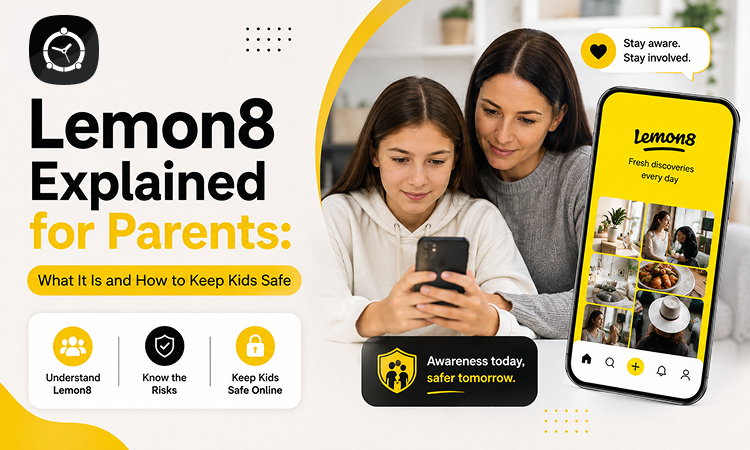
Social media is constantly evolving, and new platforms can quickly become popular among children and teenagers. One app parents may have heard about is Lemon8.
But what exactly is Lemon8? What do people use it for? Is it similar to TikTok or Instagram? And, most importantly, is Lemon8 safe for kids and teens?
This guide explains what parents need to know about Lemon8, including its features, potential risks, age requirements, and how parents can use FamilyTime wisely to encourage safer and more balanced digital habits.
What Is Lemon8?
Lemon8 is a lifestyle-focused social media app powered by TikTok. It allows users to discover, create, edit, and share photos, videos, and text-based posts.
The platform focuses heavily on lifestyle topics such as:
- Fashion and beauty
- Food and recipes
- Travel
- Health and wellness
- Home and lifestyle
- Hobbies and interests
Lemon8 also has a personalised “For You” feed that recommends content based on a user’s interests and activity. Users can like, comment on, share, and interact with posts from other people.
In simple terms, Lemon8 can feel like a combination of a lifestyle magazine, photo-sharing platform, and social network.
How Does Lemon8 Work?
When users explore Lemon8, they can browse content based on their interests. The platform’s recommendation system then helps populate their feed with similar posts.
Users can also create their own content using built-in editing tools. They can add text, filters, stickers, and other creative elements before publishing posts.
This makes Lemon8 appealing to users who enjoy creating visually attractive content rather than simply watching short videos.
However, like other social platforms, Lemon8 is built around continuous content discovery and interaction. A user can move from one post to another quickly, follow creators, read comments, and continue scrolling for extended periods.
For parents, this means that screen time and the type of content being consumed both matter.
Is Lemon8 the Same as TikTok?
Lemon8 and TikTok are connected through their ownership and ecosystem, but they offer different experiences.
TikTok is primarily known for short-form video content, while Lemon8 puts more emphasis on lifestyle posts containing photos, videos, captions, recommendations, and visual guides.
Lemon8 is developed by ByteDance, the company behind TikTok. The current U.S. Lemon8 terms state that users must be at least 13 years old, although age requirements can vary by region.
Parents should therefore check the current requirements that apply in their country before allowing a child to create an account.
What Can Kids and Teens Do on Lemon8?
Depending on the features available to them, users can:
- Create photo and video posts
- Write captions and share opinions
- Follow other users
- Like and comment on posts
- Search for topics and creators
- Discover personalised content
- Communicate with other users
- Use editing and creative tools
The app’s current App Store listing also indicates that Lemon8 includes user-generated content, messaging and chat, advertising, parental controls, and age-assurance features.
These features can make Lemon8 creative and engaging, but they also introduce some of the same concerns parents face with other social networking platforms.
What Are the Potential Risks of Lemon8 for Kids?
No social media platform is completely risk-free. Lemon8’s combination of personalised recommendations, user-generated content, social interaction, and lifestyle content means parents should understand the possible concerns.
1. Exposure to Inappropriate Content
Although Lemon8 has community guidelines and content moderation systems, users may still encounter content that isn’t appropriate for their age.
Posts can cover mature subjects, body image, relationships, alcohol, wellness, and other topics. Third-party reviews have also raised concerns about mature or questionable lifestyle content appearing on the platform.
Parents should remind children that seeing something online does not automatically make it appropriate, accurate, or healthy.
2. Privacy Concerns
Social media encourages users to share information about themselves. A child might unintentionally reveal their school, location, daily routine, interests, or other personal details through photos, captions, comments, or profiles.
Lemon8’s App Store privacy disclosure indicates that information such as identifiers, search history, user content, usage data, and coarse location may be associated with the user, depending on how the service is used.
Parents should teach children to think before posting and avoid sharing sensitive personal information publicly.
3. Contact With Strangers
Lemon8 allows users to interact with other members through comments and messaging features.
That means children may encounter people they don’t know in real life. Parents should explain that online profiles don’t always tell the complete story about who someone really is.
A good family rule is simple: Never share private information or agree to meet an online contact without involving a trusted adult.
4. Excessive Screen Time
The personalised feed can make it easy to keep scrolling.
A child may open Lemon8 intending to spend a few minutes looking at fashion ideas or recipes and end up spending much longer on the app.
This is where parents can focus on healthy digital habits rather than simply banning every new app.
5. Influencer Marketing and Product Promotion
Lifestyle content can naturally include products, brands, beauty recommendations, clothing, supplements, travel services, and other purchases.
Children may not always recognise when a post is promotional or when a creator has a commercial interest in recommending something.
Parents can use Lemon8 as an opportunity to teach children about advertising, sponsored content, product placement, and critical thinking.
6. Unrealistic Lifestyle and Appearance Standards
Social media often presents carefully selected images of people’s lives and appearances.
Repeated exposure to highly edited photos, beauty trends, expensive products, or idealised lifestyles can affect how young users view themselves.
Parents should encourage children to remember that social media is a curated version of someone’s life, not a complete picture of reality.
Is Lemon8 Safe for Kids?
The answer depends on the child’s age, maturity, the local age requirements, and how the platform is used.
Lemon8 states that it has youth-safety measures, including minimum-age requirements, content restrictions, and protections intended to make the platform more appropriate for younger users. Its guidelines state that Lemon8 is generally available to users aged 13 and older, with different requirements potentially applying in certain regions.
At the same time, meeting the minimum age does not mean every post or interaction will be suitable for every teenager.
Parents should consider:
- Is my child mature enough to handle social media interactions?
- Do they understand online privacy?
- Can they recognise inappropriate or misleading content?
- Do they know what to do if a stranger contacts them?
- Can they manage their screen time responsibly?
These questions can be more useful than looking at age alone.
How Can Parents Help Kids Use Lemon8 More Safely?
Start with an open conversation.
Instead of simply saying, “You can’t use Lemon8,” ask your child what they like about it. Find out which creators they follow, what types of content they enjoy, and how they interact with other users.
Then establish a few clear family rules.
Set Privacy Rules
Teach children not to post:
- Home addresses
- School details
- Phone numbers
- Passwords
- Live location
- Private family information
- Personal details about friends without permission
Encourage Critical Thinking
Ask children questions such as:
“Who created this post?”
“Is this person trying to sell something?”
“Do we know whether this information is actually true?”
These simple questions can help children become more thoughtful digital consumers.
Set Healthy Screen-Time Limits
Social media can easily compete with homework, sleep, family time, exercise, and offline hobbies.
Parents can create reasonable screen-time schedules and app-specific limits instead of relying entirely on their child to decide when to stop.
Use FamilyTime Wisely for Better Digital Parenting
Parents looking for additional tools can use FamilyTime Parental Controls to help manage their child’s digital routine.
FamilyTime provides tools for screen-time management, app limits, app and web blocking, activity reports, content filtering, and social media monitoring, depending on the device and feature availability.
For example, parents can use Individual App Limits to establish specific usage limits for apps rather than applying the same limit to the entire device. This can be useful when parents want their child to have access to social media while still keeping time spent on it under control.
FamilyTime also offers daily screen-time limits and schedules that can help families create device-free periods for studying, meals, bedtime, and other important activities.
The goal isn’t to watch every second of a child’s online life. Use FamilyTime wisely as a tool to support conversations, boundaries, and responsible technology use.
Parents should combine parental controls with trust and regular conversations so children gradually learn to make safer digital decisions on their own.
Final Thoughts
Lemon8 is a visually focused social media platform where users can discover and share lifestyle content, connect with other users, and express themselves creatively. Its focus on fashion, beauty, food, travel, wellness, and other interests can make it appealing to teenagers.
But like any social platform, Lemon8 comes with potential concerns involving privacy, strangers, inappropriate content, advertising, unrealistic expectations, and excessive screen time.
Parents don’t have to understand every new social media trend overnight. Start by learning how the platform works, checking its current age requirements, talking openly with your child, and setting clear expectations.
And when additional support is needed, using tools such as FamilyTime for screen-time management, app controls, content filtering, and activity insights can help parents create a safer and more balanced digital environment for their children.
The best approach is not simply controlling what children see—it is helping them develop the skills to navigate the digital world safely and responsibly.