What Is Yubo? Is It Safe for Kids and Teens?
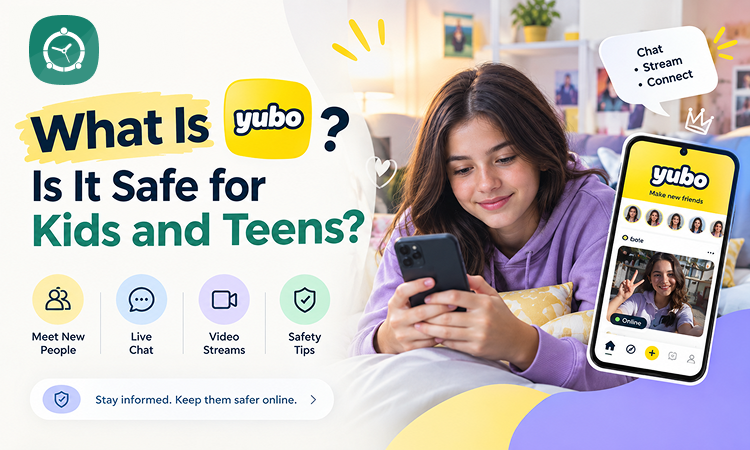
Social media apps are constantly changing, and keeping track of every platform your child hears about can feel like a full-time job. One name that has attracted plenty of attention over the years is Yubo.
Yubo is built around meeting new people, chatting, swiping through profiles, and joining live video conversations. That combination naturally raises an important question for parents: What is Yubo, and is Yubo safe for kids and teens?
There is also an important recent change parents should know about. Yubo is no longer intended for teenagers. The platform transitioned to an 18+ service in November 2025, which means anyone under 18 should not be using it.
So, if you discover Yubo on your child’s phone, here’s what you need to know.
What Is Yubo?
Yubo is a social discovery app designed to help people meet and communicate with new people online. It is available on Android and iOS.
Instead of focusing heavily on followers, likes, and traditional social media feeds, Yubo emphasises real-time social interaction. Users can discover profiles, connect with people who share similar interests, exchange messages, and participate in livestreams.
Some of its main features include:
- Profile swiping: Users can browse profiles and swipe to find people they might want to connect with.
- Live streaming: Users can join live video rooms and communicate in real time.
- Private chats: Connections can continue through direct conversations.
- Interest tags: People can find others based on common interests.
- Group interactions: Users can communicate with several people through livestreams and other social features.
Yubo describes itself as a social discovery platform rather than a traditional dating app. However, because it enables users to discover and communicate with new people, parents should understand how these interactions work.
How Old Do You Have to Be to Use Yubo?
This is particularly important because information about Yubo’s age requirements found in older articles may now be outdated.
The current minimum age for Yubo is 18.
Yubo previously allowed users between the ages of 13 and 17 in a separate segment of its platform. However, the company announced that it would become an exclusively 18+ platform effective November 1, 2025.
Yubo says users must now verify their age when joining the platform. Its verification process can involve a live selfie video and age-estimation technology, with additional verification used when necessary.
For parents, the rule is therefore straightforward: Yubo is not currently designed for children or teenagers under 18.
Why Are Parents Concerned About Yubo?
Even with an 18+ requirement, parents may hear about Yubo from their teenagers or discover that a child has tried to access the platform.
Understanding the potential risks is therefore still useful.
1. Connecting With Strangers
Meeting new people is one of Yubo’s main purposes. Users can discover people they have never met offline and potentially begin conversations with them.
For adults, meeting new people online is a personal choice. For children, however, communicating with unknown adults can create significant safety concerns.
A minor who manages to access an adult-oriented social platform may not always know whether another person’s identity, intentions, or claims are trustworthy.
Parents should regularly remind children that an online profile does not automatically tell you everything you need to know about the person behind it.
2. Live Streaming Can Encourage Oversharing
Livestreaming is a major part of the Yubo experience.
Unlike uploading a carefully reviewed photo or post, livestreaming happens in real time. A user may accidentally reveal information without realizing its importance.
That could include:
- Their school or workplace
- Their neighbourhood
- Their daily routine
- Their phone number
- Their location
- Details about family members
- Other personally identifiable information
Once personal information has been shared with strangers, controlling where it goes next can become difficult.
Teaching children to protect their personal information is therefore essential across all social platforms, not only Yubo.
3. Inappropriate Conversations or Content
Whenever people can communicate freely through messages, comments, and video, there is a possibility of encountering uncomfortable or inappropriate behaviour.
Yubo has community guidelines covering areas such as nudity, violence, hate speech, privacy, and respectful behaviour. It also provides reporting and blocking features.
Those protections are valuable, but moderation cannot replace sensible online behaviour.
Users still need to know when to leave a conversation, block someone, report inappropriate behaviour, and avoid sharing sensitive information.
4. Fake Identities and Misrepresentation
Yubo requires age verification and says its safety systems are designed to make it harder for people to misrepresent their age or identity.
That is an important safeguard.
However, parents should teach children a broader rule that applies throughout the internet: never assume that everything another person says online is true.
Verification systems can reduce certain risks, but good digital judgement remains important on any social platform.
5. Moving Conversations to Other Apps
Another concern with social discovery platforms is that a conversation may not remain on the original service.
Someone a user meets through one app could ask to continue chatting through another messaging service or social network. Moving conversations elsewhere can mean leaving behind some of the original platform’s safety tools and moderation.
Children should be particularly cautious if an online stranger asks them to move to a private communication channel, keep conversations secret, or share personal photos and information.
6. Pressure to Meet Someone Offline
Online friendships sometimes develop into discussions about meeting in person.
For adults, that decision requires ordinary personal safety precautions. For minors interacting with adults, however, it presents a much more serious concern.
Children should understand that they should never arrange an in-person meeting with an online stranger without involving a trusted parent or guardian.
They should also tell a trusted adult if someone online pressures them to meet secretly.
So, Is Yubo Safe?
Yubo has implemented several safety measures.
The company says all users must verify their age. It also uses automated technology and human moderation, maintains community guidelines, and provides tools that allow users to report or block other people.
However, asking whether Yubo is “safe” requires some context.
For adults who meet the platform’s age requirements, Yubo provides safety features designed to reduce online risks. But no social platform can completely eliminate risks associated with interacting with strangers, sharing personal information, livestreaming, or inappropriate behaviour.
For children and teenagers under 18, the answer is much simpler:
They should not be using Yubo because the platform is currently restricted to adults aged 18 and older.
What Should Parents Do If Their Teen Has Yubo?
Finding Yubo on your teenager’s phone doesn’t need to begin with an argument.
Start with a conversation.
Ask how they discovered the app, why they wanted to use it, who they have been communicating with, and whether anyone has ever made them uncomfortable.
Explain that the concern isn’t simply about restricting social media. Yubo’s current minimum age is 18, and adult-oriented social spaces can expose minors to interactions they may not be ready to handle.
Parents can also establish some basic digital safety rules:
- Never share your home address, school, phone number, or live location with strangers.
- Don’t send private or intimate photos.
- Don’t move conversations to another app simply because a stranger asks.
- Block and report anyone behaving inappropriately.
- Never agree to secretly meet someone you first encountered online.
- Tell a parent or trusted adult when an online interaction feels uncomfortable.
Keeping communication open is often one of the strongest digital safety tools a family has.
How FamilyTime Can Help Parents Manage Risky Apps
Conversations and trust should form the foundation of online safety. But parents may also need practical tools to enforce age-appropriate digital boundaries.
That’s where a parental control solution such as FamilyTime can help.
FamilyTime gives parents tools to understand and manage how their children use smartphones and apps. Parents can review installed apps and use Apps & Games Blocker to restrict access to apps they consider inappropriate. This can be particularly useful when an app has a minimum age above the child’s age.
FamilyTime also provides daily usage limits and individual app limits, helping families prevent social apps and games from consuming excessive amounts of a child’s day.
Parents can also use FamilyTime’s Web Blocker and content safety tools to restrict inappropriate websites and create a safer browsing environment.
Rather than relying on a single restriction, parents can combine these tools with regular conversations about privacy, strangers, healthy screen habits, and responsible social media use.
The goal isn’t to watch every tap a child makes. It’s to create reasonable boundaries while children gradually develop the judgement they need to navigate the digital world independently.
How to Talk to Your Child About Apps Like Yubo
Children often hear about new apps long before their parents do. Simply banning every unfamiliar platform may encourage secrecy rather than safer behaviour.
Instead, make digital safety an ongoing family conversation.
You could occasionally ask:
“What apps are popular with your friends right now?”
That simple question can tell you much more than waiting until something goes wrong.
When your child wants a new app, look at it together. Check its minimum age, privacy settings, communication features, location permissions, and whether users can interact with strangers.
Most importantly, make sure your child knows they can come to you if something uncomfortable happens online without immediately fearing punishment.
Final Thoughts: Should Parents Worry About Yubo?
Yubo is now an 18+ social discovery platform designed to help adults meet new people through profile discovery, messaging, and livestreaming. The company has introduced age verification, moderation, reporting, blocking, and other safety measures.
But the most important fact for parents is simple: Yubo is not intended for anyone under 18.
If your child or teenager has installed Yubo, treat it as an opportunity to discuss why age restrictions exist and what makes communication with strangers online risky.
Parental control tools such as FamilyTime can add another layer of protection by helping parents manage apps, screen time, web access, and other aspects of their children’s digital lives.
Technology will keep changing, and another unfamiliar social app will inevitably appear. Parents don’t need to know every app by heart. What matters is combining sensible parental controls with open communication and teaching children the digital judgment they can carry with them wherever they go online.