Digital Parenting Lessons Every Father Should Know

Fatherhood has always been about guiding, protecting, and preparing children for the future. But today’s fathers face a challenge that previous generations never had to navigate: raising children in a world dominated by screens.
From smartphones and tablets to social media and online gaming, technology is woven into nearly every part of a child’s daily life. While these tools offer incredible opportunities for learning and connection, they also bring risks that require active and informed parenting.
Being a great dad in 2026 isn’t about banning technology. It’s about helping children develop healthy digital habits while creating meaningful family connections beyond the screen.
Here are some of the most important digital parenting lessons every father should know.
1. Technology Isn’t the Enemy—Unhealthy Habits Are
Many parents fall into the trap of viewing technology as either completely good or completely bad. The reality is far more balanced.
Devices can help children learn new skills, stay connected with friends, and explore their interests. However, excessive screen time can interfere with sleep, academic performance, physical activity, and family relationships.
The goal isn’t to eliminate screens from your child’s life. The goal is to teach balance.
Children need guidance to understand when technology adds value and when it starts taking away from more important experiences.
2. Your Kids Learn More From What You Do Than What You Say
Children closely observe their parents’ behaviour.
If a father spends dinner scrolling through social media or constantly checking work emails, children receive a powerful message about technology use—even if they are being told to put their own devices away.
One of the most effective forms of digital parenting is leading by example.
Consider:
- Creating device-free family meals
- Putting phones away during conversations
- Setting screen-free hours at home
- Prioritizing face-to-face interaction
Small changes in your own habits can have a lasting influence on your children.
3. Online Safety Conversations Should Start Early
Many parents wait until their children are teenagers before discussing online safety. By then, children may already be using social platforms, chatting with strangers, or sharing personal information online.
Digital safety conversations should begin as soon as children start using connected devices.
Talk openly about:
- Privacy and personal information
- Cyberbullying
- Online scams
- Stranger danger online
- Responsible social media use
- Digital footprints
The goal isn’t to create fear. It’s to build awareness and confidence.
Children who feel comfortable talking to their parents about online experiences are more likely to seek help when something goes wrong.
4. Screen Time Should Be Managed, Not Constantly Negotiated
Many fathers know the daily struggle:
“Five more minutes.”
“Just one more video.”
“One more game.”
Without clear boundaries, screen time often turns into a constant negotiation.
Establishing consistent expectations helps reduce conflict and creates healthier habits.
Consider creating family rules around:
- Daily screen time limits
- Device-free bedrooms
- Homework before entertainment
- Screen-free family activities
- Weekend technology schedules
When expectations are clear, children are less likely to push boundaries and more likely to develop self-discipline.
5. Quality Time Beats Quantity Every Time
One of the biggest concerns many fathers have today is finding enough time to connect with their children.
The good news is that meaningful relationships aren’t built solely on the number of hours spent together. They are built through intentional moments of connection.
Even 30 to 60 minutes of focused, distraction-free interaction can strengthen family bonds.
Some simple screen-free activities include:
- Playing sports
- Riding bikes
- Cooking together
- Board game nights
- Family walks
- Reading together
- Building projects
- Outdoor adventures
Children often remember these shared experiences far more than the latest app, game, or device.
6. Digital Parenting Requires Consistency
Children thrive when rules are predictable.
If screen time limits change daily based on mood, children become confused and frustrated.
Consistency helps establish healthy expectations and encourages responsibility.
This doesn’t mean being overly strict. It means applying family rules fairly and consistently while remaining flexible when appropriate.
The most successful digital parenting strategies are the ones families can realistically maintain long-term.
7. Monitoring Is an Act of Care, Not Control
Some parents worry that monitoring digital activity might damage trust.
In reality, age-appropriate supervision is a normal part of parenting.
Just as fathers teach children how to cross a busy street safely, they also need to guide them through the digital world.
Children benefit from support and oversight as they learn to navigate the following:
- Social media
- Online gaming
- Web browsing
- Messaging apps
- Digital purchases
Monitoring should always be paired with open communication so children understand that parental involvement comes from care and protection—not punishment.
8. Family Connection Must Be Protected Intentionally
Technology is designed to capture attention.
Without conscious effort, screens can slowly replace family conversations, shared experiences, and meaningful interactions.
Many fathers discover that the biggest challenge isn’t managing their child’s device use—it’s protecting family time itself.
That’s why creating intentional screen-free moments is so important.
Family dinners, weekend activities, bedtime conversations, and outdoor adventures provide opportunities to connect, communicate, and build stronger relationships.
These moments become the foundation of lifelong memories.
The Best Gift Fathers Can Give Their Children
Father’s Day often focuses on gifts, gadgets, and material things.
But the truth is that most children don’t need another device.
What they need most is time.
Time to talk.
Time to play.
Time to learn.
Time to grow together.
The most meaningful gift a father can give is his presence.
By helping children build healthier digital habits, fathers create more opportunities for connection, communication, and shared experiences.
And those moments often become the memories that last a lifetime.
How FamilyTime Helps Fathers Create More Family Time
Digital parenting doesn’t have to be overwhelming.
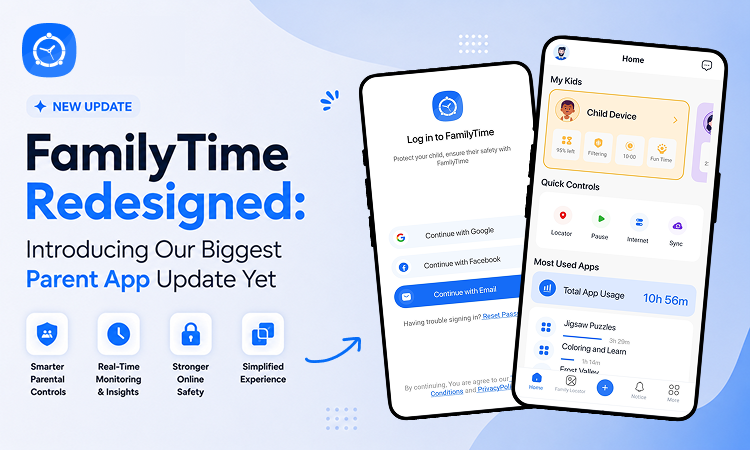
FamilyTime helps parents guide their children’s technology use with tools designed to encourage healthier digital habits and safer online experiences.
With features that help manage screen time, establish routines, and support balanced device use, FamilyTime empowers families to spend less time negotiating over screens and more time enjoying meaningful moments together.
This Father’s Day, the best gift for dads isn’t another gadget.
It’s more quality time with the people who matter most.
Take the 60-Minute Challenge
This Father’s Day, challenge your family to spend 60 screen-free minutes together every day for one week.
Play a game.
Go for a walk.
Cook a meal.
Ride bikes.
Talk.
Laugh.
Create memories.
Because the best moments in life happen offline.