AI Sextortion: What Every Parent Must Know in 2026
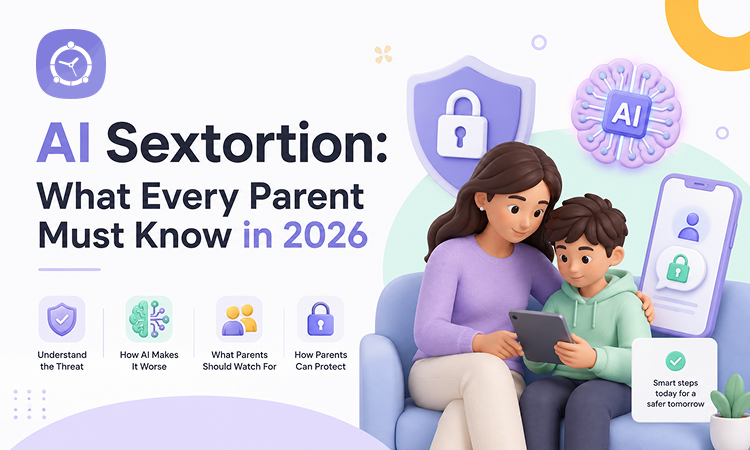
Artificial intelligence is changing the digital world faster than ever. While AI tools can help children learn, create, and explore safely, criminals are also using AI in dangerous ways. One of the fastest-growing threats families now face is AI sextortion.
Parents everywhere are becoming increasingly concerned about how online predators use AI-generated images, fake identities, and manipulation tactics to target children and teenagers.
If you have children using social media, gaming apps, messaging platforms, or AI chatbots, understanding AI sextortion is no longer optional — it is essential.
In this blog, we’ll explain:
- What AI sextortion is
- How predators target children
- Warning signs parents should never ignore
- How to protect your family online
- Practical digital safety strategies every parent should use
What Is AI Sextortion?
AI sextortion is a form of online blackmail where criminals use artificial intelligence tools to manipulate, threaten, or exploit children and teens.
Unlike traditional sextortion scams, AI allows predators to:
- Create fake explicit images using deepfake technology
- Impersonate real people online
- Generate realistic fake conversations
- Manipulate victims emotionally
- Automate scams at scale
In many cases, predators do not even need real photos. AI can generate convincing fake content using just a few public social media pictures.
The goal is usually to:
- Extort money
- Demand more images
- Manipulate victims emotionally
- Gain control over children and teens
Why AI Sextortion Is Growing So Fast
Several trends are fuelling the rise of AI sextortion:
1. AI Tools Are Easily Accessible
Deepfake generators and AI image tools are becoming widely available online, making it easier for criminals to create fake content quickly.
2. Teens Share More Online
Many teenagers regularly post selfies, videos, and personal information across social media platforms.
3. Predators Use Fake Identities
AI-generated profile pictures and chatbot conversations can make fake accounts appear incredibly realistic.
4. Kids Spend More Time Online
Gaming platforms, social media apps, and messaging services give predators more opportunities to contact children.
How AI Sextortion Usually Starts
Most AI sextortion cases begin with a seemingly harmless online interaction.
A predator may:
- Send a friend request
- Start chatting in a gaming app
- Pretend to be another teenager
- Use fake AI-generated photos
- Compliment or emotionally manipulate the child
Over time, the scam escalates.
The predator may:
- Request personal photos
- Threaten to share fake explicit images
- Demand money or more content
- Claim they hacked the victim’s account
- Use fear and embarrassment to control the child
Many children panic and feel trapped, which is exactly what scammers want.
Common Apps Predators Use
AI sextortion can happen almost anywhere children communicate online, including:
- Snapchat
- TikTok
- Discord
- Telegram
- Roblox chat
- Online gaming platforms
- AI chatbot apps
Parents should remember that predators often follow trends and move to new apps quickly.
Warning Signs Your Child May Be Targeted
AI sextortion victims often feel ashamed or scared. Many never tell their parents directly.
Watch for these warning signs:
- Sudden anxiety after using devices
- Deleting social media accounts unexpectedly
- Becoming secretive online
- Emotional distress or panic
- Avoiding school or friends
- Receiving messages at odd hours
- Sudden requests for money
- Drastic mood changes
Even one or two of these signs can indicate a serious problem.
How Parents Can Protect Their Children
1. Talk Openly About Online Dangers
Children are more likely to seek help when parents create a safe, non-judgemental environment.
Teach kids:
- Never share personal images
- Not everyone online is real
- AI can create fake photos and videos
- They should immediately report threats
Most importantly, make sure your child knows they will not get in trouble for asking for help.
2. Review Privacy Settings Together
Help children:
- Make social media accounts private
- Limit who can message them
- Disable location sharing
- Remove unknown followers
Many predators gather information from public profiles.
3. Monitor Digital Activity Responsibly
Parents should stay aware of:
- New apps installed
- Online contacts
- Screen time habits
- Suspicious behavior patterns
Using trusted parental control tools like FamilyTime can help parents monitor online activity, manage screen time, and encourage safer digital habits without becoming overly invasive.
FamilyTime offers features that support healthier digital parenting, including:
- App monitoring
- Screen time controls
- Location tracking
- Usage insights
- Safe browsing support
The goal is not surveillance — it is protection and awareness.
What To Do If Your Child Becomes a Victim
If your child experiences AI sextortion:
Stay Calm
Children need support, not punishment.
Stop Communication
Tell your child not to respond to threats or demands.
Save Evidence
Take screenshots of:
- Messages
- Usernames
- Images
- Payment requests
Report the Account
Use reporting tools on social media platforms immediately.
Contact Authorities
Many countries now treat sextortion as a serious cybercrime.
Seek Emotional Support
Victims often experience fear, shame, anxiety, and depression after these incidents.
Why Digital Parenting Matters More Than Ever
AI is transforming childhood faster than many parents expected.
Today’s families face challenges previous generations never imagined:
- AI-generated scams
- Deepfake manipulation
- Fake online identities
- Sophisticated social engineering
The solution is not banning technology completely.
Instead, parents need:
- Open communication
- Digital awareness
- Healthy online boundaries
- Smart safety tools
- Ongoing education
Digital parenting is becoming one of the most important parenting skills of the modern era.
Final Thoughts
AI sextortion is one of the most alarming online threats facing families today, but awareness is the first step toward protection.
Parents do not need to become cybersecurity experts overnight. Small actions — regular conversations, stronger privacy settings, and responsible monitoring — can significantly reduce risks.
Technology will continue evolving, and so will online threats. The best defense is staying informed, involved, and connected with your child’s digital world.
By combining trust, education, and smart tools like FamilyTime, families can create safer online experiences for children in the AI era.